Blower Door Testing: What Every Builder Should Know Before Final Inspection
A blower door test is one of the final steps in verifying a home's energy performance and code compliance. While the test itself only takes a short time to perform, failing it can delay final inspections, create costly callbacks, and require additional air sealing after finishes are complete.
The good news is that most blower door failures are preventable.
Understanding what a blower door test measures—and addressing common air leakage areas during construction—can help builders avoid delays, reduce rework, and deliver a better-performing home.
What Is a Blower Door Test?
A blower door test measures the amount of uncontrolled air leakage through a home's building envelope.
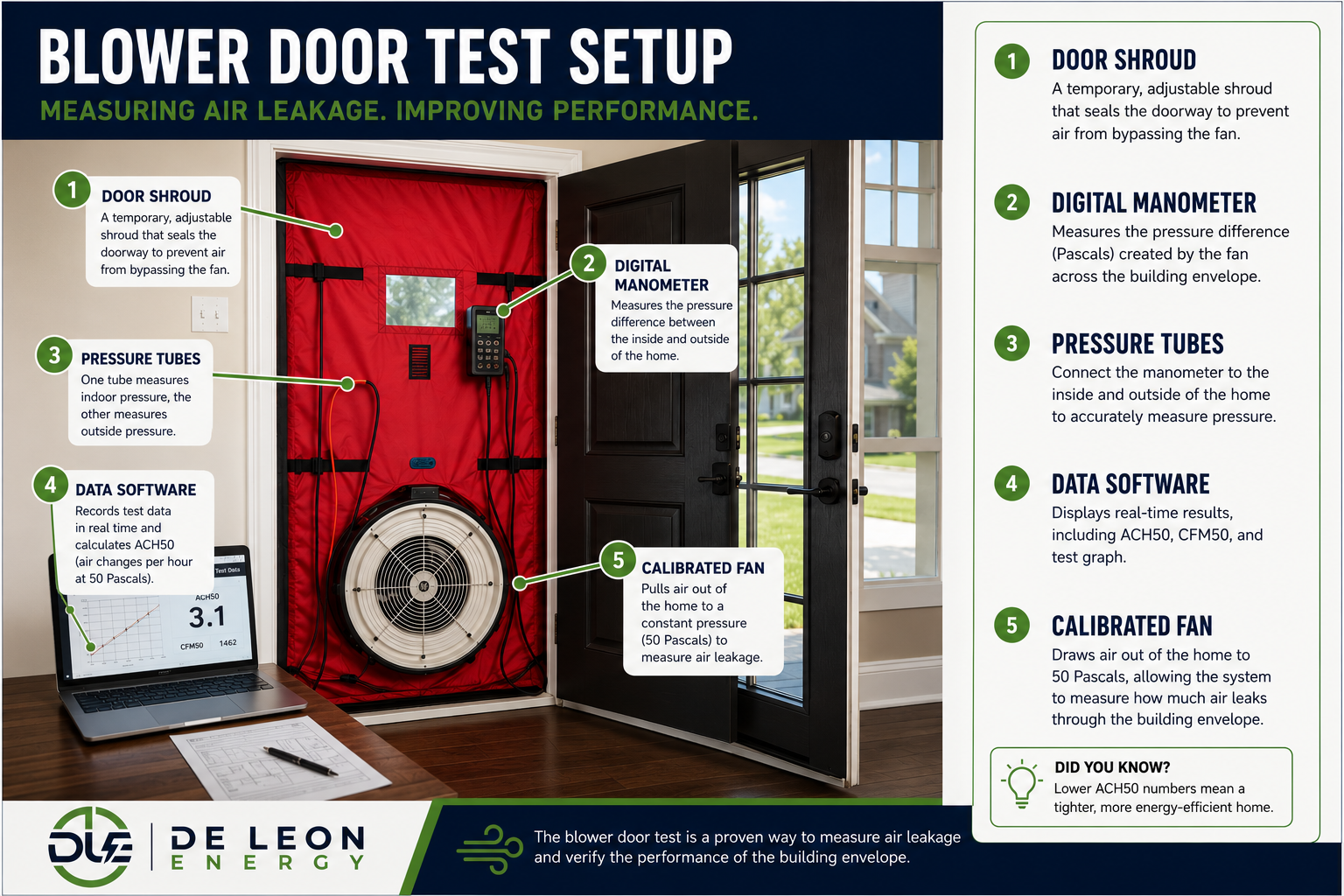
During the test, a calibrated blower door fan is temporarily installed in an exterior doorway. The fan depressurizes the home to 50 Pascals (Pa), creating a consistent pressure difference between the inside and outside of the house.
As the fan removes air from the home, outside air enters through every gap, crack, and penetration in the building envelope. The blower door fan and digital manometer work together to measure the airflow required to maintain the 50 Pascal pressure difference. Using the home's measured volume, the testing equipment then calculates the home's Air Changes per Hour at 50 Pascals (ACH50).
Simply put, the tighter the home, the less air the blower door fan must move to maintain the test pressure.
It's important to remember that a blower door test does not measure insulation performance. Instead, it measures how well the home's air barrier controls unintended air leakage.
Why Do Building Codes Require Blower Door Testing?
Today's homes are built tighter than ever before to improve energy efficiency, comfort, and durability. While reducing air leakage lowers heating and cooling costs, it also ensures the home performs as it was designed.
Blower door testing provides a consistent, repeatable method of verifying that the home's air barrier has been properly installed and meets the requirements of the adopted energy code.
A tighter building envelope offers several benefits:
Lower heating and cooling costs
Improved indoor comfort
Reduced drafts
Better humidity control
Improved HVAC performance
Better indoor air quality when paired with properly designed mechanical ventilation
Compliance with the adopted energy code
Without testing, there is no reliable way to determine how airtight a completed home actually is.
What Does ACH50 Mean?
When discussing blower door results, you'll often hear the term ACH50.
ACH stands for Air Changes per Hour, while the "50" refers to the 50 Pascal pressure difference created during the blower door test.
ACH50 estimates how many times the total volume of air inside the home would be replaced in one hour while the home is maintained at that test pressure.
In simple terms: The lower the ACH50, the tighter the home.
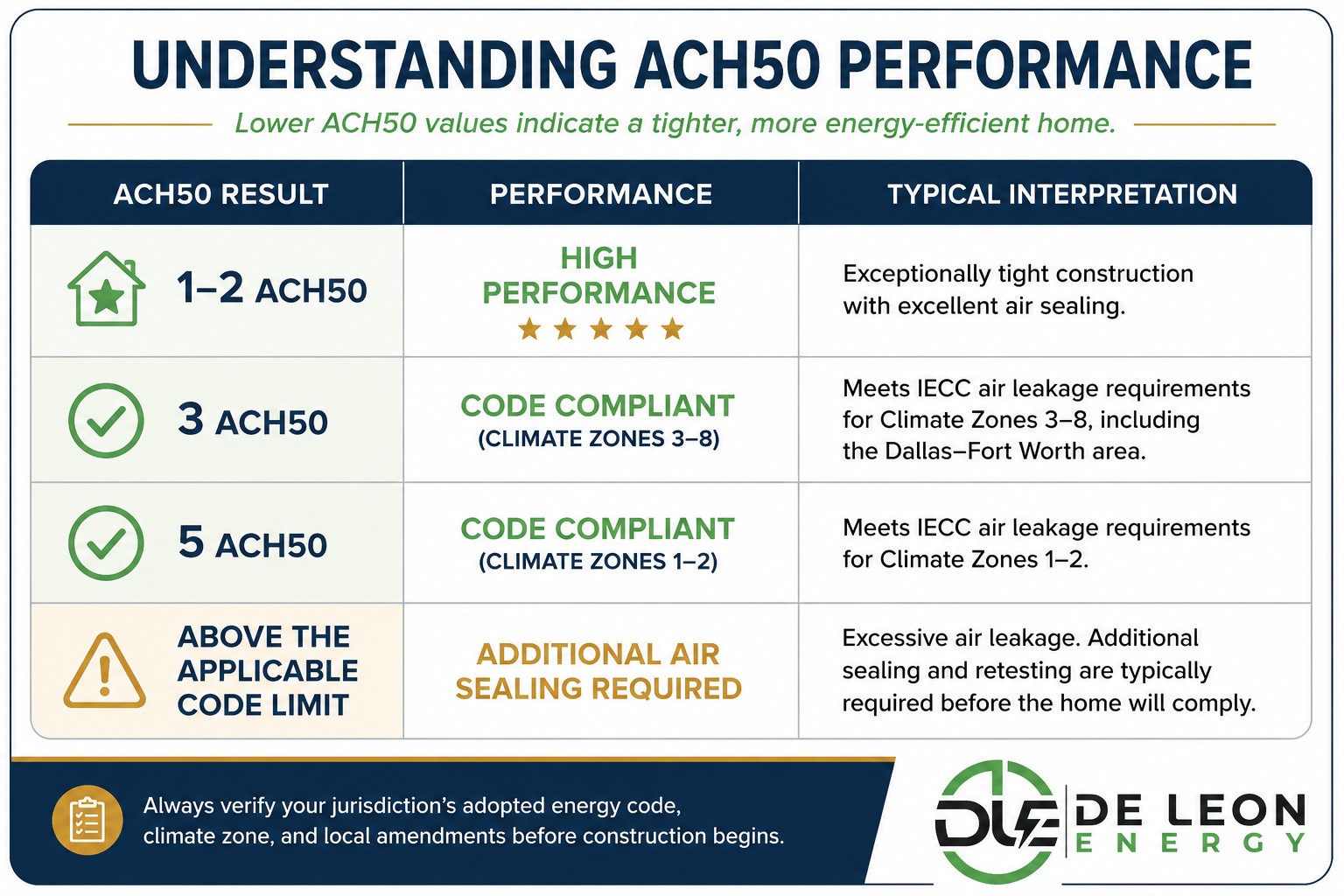
Always verify your jurisdiction's adopted energy code, climate zone, and local amendments before construction begins.
Builder Tip: Always verify your jurisdiction's adopted energy code, climate zone, and any local amendments before construction begins. Some cities have additional requirements beyond the model code.
Where Homes Commonly Leak Air
Most blower door failures are not caused by one large opening.
Instead, they result from dozens of small leaks throughout the building envelope that add up over the entire home.
Some of the most common leakage locations include:
Unsealed top plates
Plumbing penetrations
Electrical penetrations
HVAC penetrations
Recessed lighting
Window rough openings
Door rough openings
Behind tubs and showers on exterior walls
Fireplace surrounds
Attic access openings
Dropped soffits
Rim joists
Garage separation walls
Exhaust fan penetrations
These areas are much easier—and much less expensive—to seal during rough construction than after insulation, drywall, and finishes have been installed.
Catch Problems Before They're Covered
One of the best ways to improve your chances of passing a blower door test is to schedule an energy inspection during the rough stage of construction.
At De Leon Energy, we inspect the building envelope while framing, penetrations, and air sealing details are still visible. This allows builders to correct deficiencies before insulation and drywall cover them, saving both time and money later in the project.
Builders who schedule a rough energy inspection with De Leon Energy experience approximately a 90% first-time pass rate on blower door testing.
Addressing air leakage early helps reduce callbacks, avoid inspection delays, and keep projects moving toward final approval.
A rough energy inspection helps identify air leakage before insulation and drywall are installed—making corrections faster, less expensive, and helping your project stay on schedule.
Preparing for a Successful Blower Door Test
By the time your project reaches final inspection, air sealing should already be complete. A few minutes spent checking common leakage areas before scheduling the blower door test can help prevent unnecessary delays.
Before requesting your final inspection, verify that:
□ Windows and exterior doors are fully installed and weatherstripped.
□ All plumbing, electrical, and HVAC penetrations have been properly sealed.
□ Top plates, bottom plates, and framing joints have been air sealed.
□ Attic access openings have weatherstripping and insulation installed.
□ Recessed lighting fixtures are properly sealed where required.
□ Fireplace surrounds and chimney penetrations have been sealed.
□ Rim joists have been insulated and air sealed.
□ Garage separation walls are completely sealed.
□ Exhaust fan and dryer vent penetrations have been sealed.
□ Mechanical ventilation systems have been installed and are operational, if required by the adopted code.
Completing these items before the final inspection can significantly improve your chances of passing the blower door test on the first attempt.
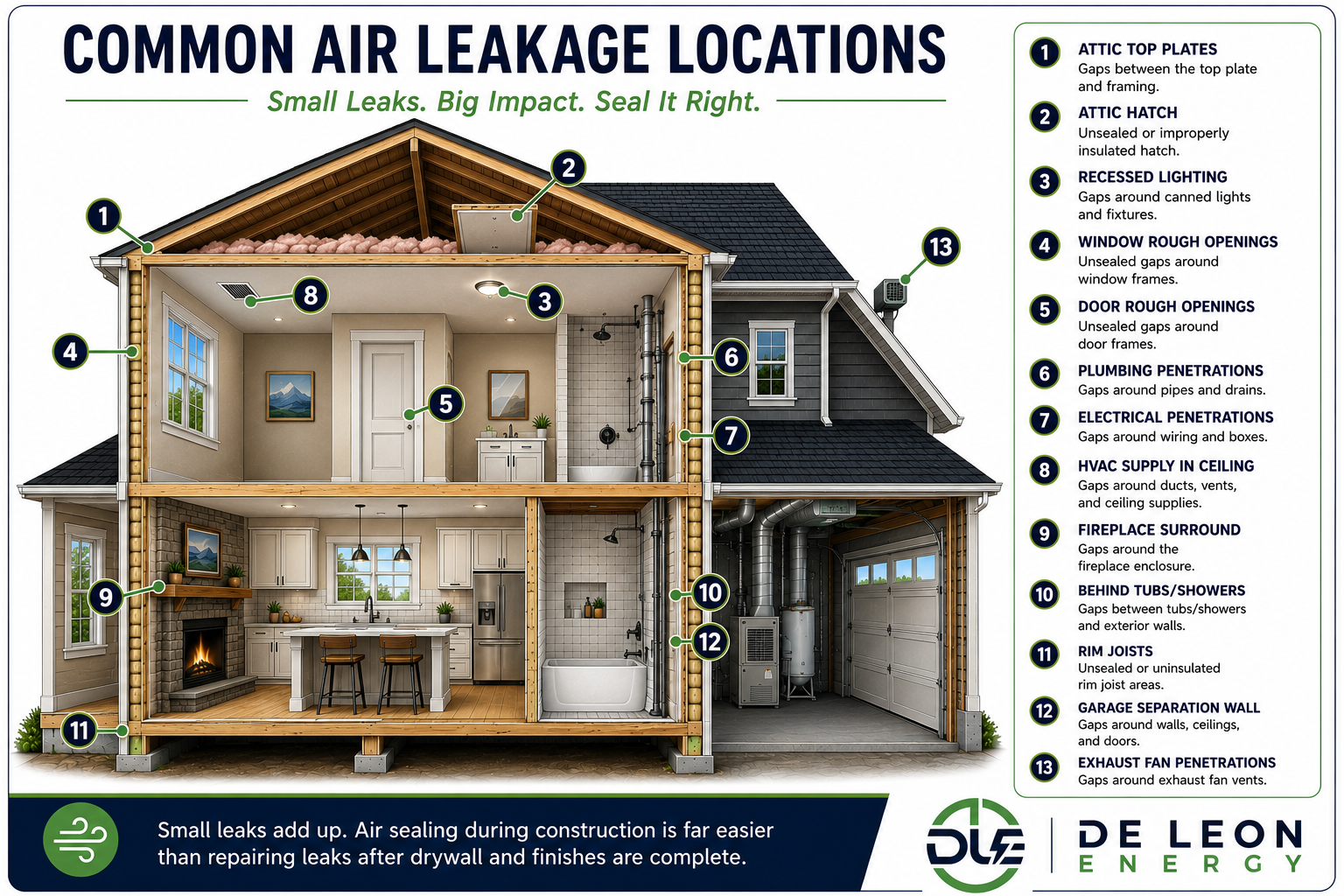
Small leaks add up. Air sealing during construction is far easier than repairing leaks after drywall and finishes are complete.
Frequently Asked Questions
What happens if my home fails the blower door test?
If a home exceeds the allowable air leakage limit, additional air sealing is typically required before the home can pass the final energy inspection. Once the necessary corrections have been completed, the home must be retested to verify compliance.
Can insulation compensate for excessive air leakage?
No.
Insulation slows heat transfer, while the air barrier controls unwanted airflow. A home may have excellent insulation and still fail a blower door test if the building envelope has excessive air leakage.
Does every new home require a blower door test?
Most jurisdictions that have adopted modern editions of the International Energy Conservation Code (IECC) require blower door testing for new residential construction. However, requirements can vary based on the adopted code edition and any local amendments.
Always verify the requirements with your local jurisdiction before construction begins.
What ACH50 score should builders aim for?
Meeting the minimum code requirement allows a home to pass, but many builders strive for lower ACH50 values to improve comfort, reduce energy costs, and enhance overall home performance.
Projects that receive a rough energy inspection often achieve better blower door results because air leakage issues can be identified and corrected before insulation and drywall are installed.
Final Thoughts
A blower door test is more than just another inspection—it verifies that the home's air barrier is performing as intended.
Builders who understand the testing process and address air sealing early in construction typically experience fewer delays, fewer callbacks, and better-performing homes.
Whether you're building one home or managing an entire subdivision, planning for blower door testing from the beginning of the project helps ensure a smoother final inspection and a more energy-efficient finished product.
Need Help With Blower Door Testing?
De Leon Energy provides professional blower door testing, energy inspections, duct leakage testing, energy reports, and code compliance services for residential and commercial projects throughout the Dallas–Fort Worth area.
Our goal is simple:
Help builders pass inspections the first time while delivering homes that perform better for their owners.
Contact us today to schedule your blower door test or learn how a rough energy inspection can help keep your project on schedule.